
The Short Answer
Becoming an emergency dispatcher means working for a public-safety answering point (911 center), a hospital communications hub, or a similar agency — not a trucking company or delivery fleet. The path typically runs through a high school diploma or GED, a background check and medical screening, a formal training program, and state or national certification. It is a public-sector career in government or healthcare, with its own hiring pipeline that is separate from commercial dispatch roles.
> A note on scope: DispatchFlow.com covers commercial dispatch software for trucking, delivery, field service, NEMT, and similar industries. Emergency or 911 dispatching is a government public-safety career. This guide explains what that career path looks like and — for readers who may actually be searching for commercial dispatch work — clarifies where the two roads diverge.
—
What Emergency Dispatching Actually Is
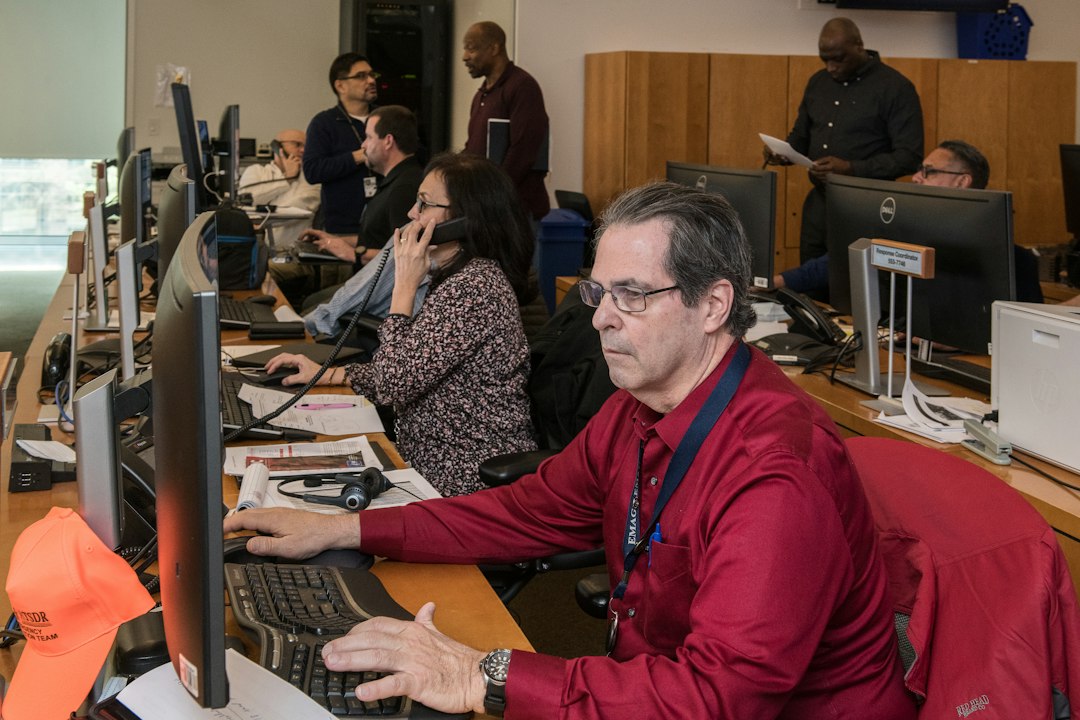
Emergency dispatchers (formally called Public Safety Telecommunicators or Emergency Communications Officers) are the trained professionals who answer 911 calls, assess situations, and coordinate police, fire, and emergency medical services (EMS) in real time. The role is high-stakes and highly regulated, governed by state agencies and voluntary national certifying bodies.
This is distinct from a commercial dispatcher, who assigns loads, routes drivers, or schedules field-service technicians using software platforms. If you are looking to work as a fleet dispatcher or freight broker, the career steps are different — but we cover those at the end of this guide.
—
Before You Start: What to Know and Prepare
Before you apply to any emergency communications center, understand the full picture of what you are walking into.
The work environment is demanding. Emergency dispatchers work rotating shifts — including nights, weekends, and holidays — in a windowless communications center. Call volume is unpredictable, and the emotional weight of managing life-or-death situations is real. Burnout and turnover are well-documented challenges in the field.
Hiring is local. Most positions are posted through county, city, or state government job boards, not national job sites. Find your county’s human resources or public-safety department website and check it directly.
The background check is thorough. Expect a criminal history check, driving record review, drug screening, psychological evaluation, and sometimes a polygraph. A felony conviction is typically disqualifying. Minor misdemeanors are reviewed case by case.
Certifications vary by state. Some states mandate specific training and certification before hire; others train on the job and certify afterward. Check your state’s public-safety communications training authority for the local standard.
—
Step by Step: How to Become an Emergency Dispatcher
Step 1 — Confirm the Basic Eligibility Requirements
Most agencies require:
- A high school diploma or GED
- Minimum age of 18 (some agencies require 21)
- Legal authorization to work in the United States
- No felony convictions (and a clean or near-clean misdemeanor record)
- Ability to pass hearing and vision screenings
- Strong typing speed (typically 35–45 words per minute minimum)
- Ability to multitask under pressure and speak clearly on the phone
Check your target agency’s job posting for its exact list — requirements vary more than people expect.
Step 2 — Search the Right Job Boards
Don’t start on general job sites. Go directly to:
- Your county or city government website (search “Human Resources” or “Public Safety”)
- Your state’s civil service or merit system portal
- The National Emergency Number Association (NENA) and Association of Public-Safety Communications Officials (APCO) websites, which both post job listings
Many openings accept applications only during specific windows — called open-enrollment periods — so check often.
Step 3 — Complete a Civil Service or Entrance Exam
Most government agencies require a written entrance exam that tests reading comprehension, memory recall, multitasking ability, and sometimes basic geography or map-reading. Some agencies use standardized public-safety communications tests (such as the CritiCall test, a widely used assessment). Practice tests are available online and through APCO and NENA resources.
Step 4 — Pass the Background Investigation and Screening
After scoring well on the exam, expect:
- A detailed personal history questionnaire
- Criminal and financial background check
- Drug test
- Psychological evaluation (written and/or oral interview with a psychologist)
- Medical and hearing exam
- Possibly a polygraph
Be honest throughout. Inconsistencies between what you report and what investigators find are more disqualifying than the underlying facts themselves.
Step 5 — Complete the Agency’s Training Academy
If selected, you enter a paid training program that typically runs from three to six months, sometimes longer. Training covers:
- Call-taking protocols and active listening
- Computer-Aided Dispatch (CAD) software — the platform dispatchers use to log, route, and track emergency units
- National Crime Information Center (NCIC) database queries
- Radio communications procedures
- Emergency Medical Dispatch (EMD) protocols, if the agency handles medical calls
- Multi-agency coordination
You will be evaluated throughout. Some candidates are released from training if they cannot meet performance standards.
Step 6 — Earn Your Certification
Certification requirements differ by state. Common credentials include:
- APCO Public Safety Telecommunicator (PST) Certification — a widely recognized national standard
- NENA Emergency Number Professional (ENP) — more advanced, for experienced professionals
- Emergency Medical Dispatch (EMD) Certification — required if you are handling EMS calls; issued through programs like the International Academies of Emergency Dispatch (IAED)
- State-mandated certificates — some states (Texas and Florida, for example) have their own requirements through their Commission on Law Enforcement or Emergency Management
Check your state’s training mandate. Your employing agency will often sponsor or pay for required certifications.
Step 7 — Advance and Specialize
Entry-level dispatchers typically start as call takers before moving to the radio or CAD console. Over time, experienced telecommunicators can advance to:
- Lead dispatcher or shift supervisor
- Training officer (training new hires)
- CAD administrator or technology specialist
- Quality assurance reviewer
- Center director or communications manager
Additional certifications and college coursework in criminal justice, public administration, or emergency management strengthen advancement opportunities.
—
Emergency Dispatcher Career at a Glance
| Factor | Typical Range or Standard |
|---|---|
| Minimum education | High school diploma or GED |
| Minimum age | 18–21 (varies by agency) |
| Training program length | 3–6 months (paid) |
| Typing speed requirement | 35–45 WPM minimum |
| Entry-level certification | APCO PST or state equivalent |
| Work schedule | Rotating shifts, including nights/weekends/holidays |
| Background check depth | Criminal, financial, psychological, medical, drug |
| Advancement timeline | 1–3 years to senior or supervisory roles (varies) |
—
Common Mistakes and Practical Tips
Don’t overlook the typing requirement. Many applicants are surprised to fail a typing assessment. Practice on free typing-test sites before you apply. Most agencies want 35–45 WPM with high accuracy, not just raw speed.
Be transparent on the background questionnaire. Agencies can verify almost everything. A minor issue disclosed honestly is handled very differently from the same issue discovered through investigation.
Apply to multiple agencies at once. Hiring windows open and close unpredictably. Apply broadly — county, city, and state agencies in your region — rather than waiting for a single perfect opening.
Use APCO and NENA as resources. Both organizations publish study materials, host career forums, and offer training courses you can take before you are hired. Showing up to an interview already familiar with their standards makes a strong impression.
Prepare emotionally, not just technically. Talk to working dispatchers if you can. The job involves sustained exposure to traumatic calls. Resilience, peer-support programs, and healthy coping habits are part of long-term success in the field.
—
If You Are Actually Looking for Commercial Dispatch Work
Many people searching “how do you become an emergency dispatcher” are actually interested in commercial dispatching — working for a trucking company, a delivery fleet, a field-service business, or an NEMT provider. These roles are different in almost every way.
Commercial dispatchers typically:
- Learn on the job or through short vocational programs
- Use software platforms rather than government CAD systems
- Are hired by private companies, not government agencies
- Do not require the same certification or background investigation process
The software those commercial dispatchers use is exactly what DispatchFlow covers. If you run or work for a fleet and want to understand the tools — from trucking dispatch software to NEMT dispatch software to field service dispatch software — our dispatch software guides are the right starting point. You can also read what is dispatch software for a plain-language overview of how commercial dispatch platforms work.
—
FAQ
Is emergency dispatching the same as commercial dispatching?
No. Emergency dispatching is a government public-safety career involving 911 calls, police/fire/EMS coordination, and civil service hiring processes. Commercial dispatching means assigning drivers or technicians for private fleets and delivery or service companies. The skills, tools, and hiring paths are entirely different.
Do I need a college degree to become an emergency dispatcher?
Most agencies require only a high school diploma or GED at entry level. A degree in criminal justice, public administration, or a related field can help with advancement, but it is rarely a hiring requirement for the dispatcher role itself.
How long does it take to become a fully certified emergency dispatcher?
From initial application to full solo certification typically takes six months to a year, accounting for the hiring process, training academy, and on-the-job evaluation period. This varies significantly by agency and state requirements.
What does the CritiCall test measure?
CritiCall is a pre-employment assessment used by many public-safety agencies. It tests multitasking ability, data entry speed and accuracy, decision-making, map reading, and similar skills that predict dispatcher job performance. Practice materials are widely available online.
What certifications matter most for emergency dispatchers?
The APCO Public Safety Telecommunicator (PST) certification is the most broadly recognized entry-level credential. Emergency Medical Dispatch (EMD) certification is essential if you handle medical calls. Your state may also mandate its own certificate — check with your state’s emergency communications or law enforcement standards body.
Can a felony conviction disqualify me from becoming an emergency dispatcher?
In most cases, yes. Access to sensitive law enforcement databases (such as NCIC) typically requires a clean record. Some agencies will review non-violent misdemeanors on a case-by-case basis, but a felony is almost universally disqualifying for public-safety communications roles.
What if I want to dispatch for a trucking company or delivery fleet instead?
That is commercial dispatching, and it follows a completely different path. Private employers set their own requirements, and most training happens on the job using software platforms. DispatchFlow covers the tools and software for that world — start with our best dispatch software overview or use the finder at /get-started/ to match platforms to your specific operation.
—
Conclusion
Becoming an emergency dispatcher is a serious public-safety career that requires patience with a thorough government hiring process, commitment to ongoing certification, and genuine resilience for high-pressure work. The path is clear — eligibility check, civil service exam, background investigation, paid training academy, certification — but it is not a fast one, and the emotional demands are real. Go in with your eyes open, use APCO and NENA as your primary resources, and apply to multiple agencies rather than waiting on a single opening.
If what you are actually after is a career or business in commercial fleet dispatching — or you run an operation and need to find the right dispatch software — that is exactly what DispatchFlow is built for. Our free finder at /get-started/ asks a few quick questions about your industry, fleet size, and must-have features, then matches you with third-party platforms worth a closer look. No obligation, no vendor pressure — just a shorter path to the tools that fit your operation.