
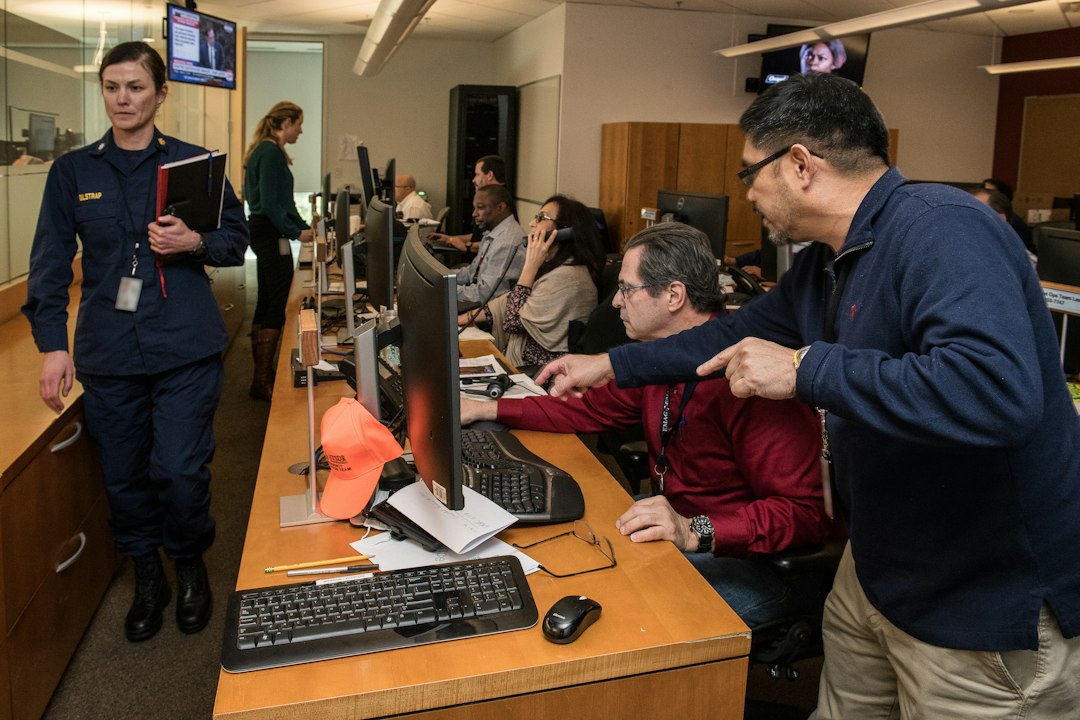
The Short Answer
Becoming an emergency dispatcher means landing a role at a public-safety answering point — a 911 call center, a police department communications center, or a fire/EMS dispatch center — rather than at a private fleet or delivery operation. The path typically runs through a high-school diploma or GED, a background check, a written and listening test, on-the-job training, and state-approved certification.
If you landed here looking for a career in private-sector dispatching — trucking, delivery, field service, NEMT, or towing — the skills overlap, but the hiring path is different. This guide covers both, so keep reading and skip to the section that fits your goal.
—
What You Should Know Before You Start
The phrase “how do you become an emergency dispatcher” covers two very different jobs. Mixing them up wastes time on the wrong application or the wrong training program.
Public emergency dispatcher (911/EMS/Police/Fire communications): You work for a government agency or contracted public-safety authority. You handle life-safety calls, coordinate police, fire, and ambulance resources, and operate under strict licensing and certification rules. Emotional resilience and composure under pressure are non-negotiable.
Private-sector dispatcher: You work for a trucking company, a last-mile delivery fleet, a field-service operation, an NEMT provider, or a towing company. You coordinate drivers and jobs using dispatch software, not emergency radio protocols. The skills include route planning, load assignment, driver communication, and customer updates.
Before you start either path, honestly assess:
- Your stress tolerance. Emergency dispatch involves extended high-pressure calls, traumatic content, and shift work including nights and weekends.
- Your technology comfort level. Both roles now rely heavily on software — computer-aided dispatch (CAD) systems for public safety, and routing/dispatch platforms for private fleets.
- Your location. State and county requirements for public-safety dispatchers vary significantly. Always verify current requirements with the hiring agency or your state’s POST (Peace Officer Standards and Training) board or equivalent communications-officer authority.
- Your long-term goal. Some people use private-sector dispatch as a stepping stone. Others prefer it permanently because the hours, pay, and pace suit their lives better.
—
Step by Step: The Public Emergency Dispatcher Path
Step 1: Confirm the minimum requirements in your area
Most agencies require a high-school diploma or GED, U.S. citizenship or legal work authorization, and a minimum age (commonly 18). Requirements vary by jurisdiction. Check the specific agency’s job posting and your state’s public-safety communications standards board before investing in training.
Step 2: Build the core skills employers test for
Emergency dispatcher hiring processes almost always include a multi-tasking assessment — you will be asked to type while listening, prioritize simultaneous inputs, and recall details under time pressure. Practice typing speed (most agencies want at least 35–40 words per minute), active listening, and geography familiarity with your target area.
Step 3: Apply through the agency or civil-service system
Most public-safety dispatch jobs are posted through a local government HR portal, a county civil-service board, or a state jobs database. Applications typically include a written exam, a typing/data-entry test, an oral board interview, a psychological evaluation, a polygraph (in many jurisdictions), and an extensive background check. Criminal history, driving record, and past drug use are all reviewed.
Step 4: Complete the academy or in-house training program
Once hired, you enter a paid training period — often 3 to 6 months — that covers CAD system operation, radio procedures, incident prioritization, and agency-specific protocols. You are typically on probation during this period and paired with a certified training officer (CTO).
Step 5: Earn your state dispatch certification
Many states require dispatchers to complete a state-approved communications training program and pass a certification exam. The Association of Public-Safety Communications Officials (APCO) and the National Emergency Number Association (NENA) each offer widely recognized credentials. Some agencies require one or both; others treat them as preferred qualifications. Requirements vary — confirm with your agency and state authority.
Step 6: Maintain certification and advance
Dispatch certifications require continuing education to renew. Over time, experienced dispatchers can move into lead dispatcher, communications supervisor, training officer, or center manager roles. Some transition into emergency management or public-safety technology roles.
—
Step by Step: The Private-Sector Dispatcher Path
If your goal is dispatching for a trucking company, a delivery fleet, a field-service business, or an NEMT provider, the steps look different — and the entry barrier is generally lower, though the operational complexity can still be significant.
Step 1: Learn how private-sector dispatch works
Private dispatchers assign loads or jobs to drivers, track vehicles in real time, update customers, handle schedule changes, and often manage invoicing or load documentation. Read through how truck dispatching works and what is dispatch software to get a grounded picture of the day-to-day.
Step 2: Get comfortable with dispatch software
Employers expect you to ramp up quickly on a CAD or dispatch platform. Many platforms offer free trials — use them to practice building a dispatch board, assigning jobs, and reading a live map. The categories vary by industry: trucking dispatch software, delivery dispatch software, field service dispatch software, and NEMT dispatch software all operate on related but distinct workflows.
Step 3: Apply for dispatcher or dispatcher-trainee roles
Small fleets often promote from within (a driver who knows the routes) or hire people with logistics, customer-service, or military backgrounds. Look for job titles like “freight dispatcher,” “fleet coordinator,” “logistics coordinator,” or “operations dispatcher.” Industry-specific job boards and general job aggregators both surface these roles.
Step 4: Build industry knowledge alongside the job
For trucking, understand Hours of Service (HOS) rules and why ELD (electronic logging device) compliance matters. For NEMT, learn how Medicaid broker trips and standing orders work. For field service, understand job quoting, parts logistics, and technician scheduling. This knowledge turns a competent dispatcher into an indispensable one.
—
Quick Comparison: Public vs. Private Dispatcher Paths
| Factor | Public Emergency Dispatcher | Private-Sector Dispatcher |
|---|---|---|
| Minimum education | HS diploma / GED (typical) | HS diploma / GED (typical) |
| Formal certification required | Usually — state/APCO/NENA | Rarely required; software training preferred |
| Hiring process length | Months (background, psych, poly) | Days to weeks |
| Primary technology | CAD system, radio | Dispatch/routing software, mobile apps |
| Shift work | Common — nights, weekends, holidays | Varies by operation |
| Stress profile | High — life-safety calls | Moderate to high — operational pressure |
| Advancement path | Lead, supervisor, EM, tech roles | Fleet manager, operations manager |
| Salary range | Varies widely by agency and region | Varies widely by industry and fleet size |
—
Common Mistakes and Tips
Mistake: Applying to 911 centers without checking local requirements first. Every jurisdiction sets its own standards. Assuming you qualify based on a general article — including this one — can waste months. Go to the source: the agency’s HR page and your state’s public-safety communications authority.
Mistake: Underestimating the psychological demands. Emergency dispatch involves exposure to traumatic content on a regular basis. Many agencies provide peer support programs, but the emotional load is real. Talk to working dispatchers before committing.
Mistake: Skipping the typing and multi-tasking practice. These are testable, and failing the assessment eliminates you before the interview stage. Free typing-practice tools are widely available — use them.
Tip for private-sector applicants: Hands-on software experience stands out. If you can walk into an interview having used a dispatch platform — even a free trial — you demonstrate practical readiness that most candidates lack.
Tip for both paths: Geography knowledge matters. Whether it’s memorizing street grids for 911 or knowing a region’s truck routes and delivery zones, knowing the territory makes you faster and more accurate.
—
Tools That Help (for Private-Sector Dispatchers)
If you are building skills for private-sector dispatching, getting familiar with real dispatch platforms is the most useful thing you can do before or alongside a new job. The categories below align with the most common dispatcher roles:
- Trucking and freight: Platforms typically include a load board connection, ELD integration, invoicing, and driver mobile apps. See trucking dispatch software for a breakdown.
- Delivery and last-mile: These emphasize route optimization, proof of delivery, and customer notifications. Delivery dispatch software covers the key differences.
- Field service: Think scheduling, job quoting, and technician tracking. Field service dispatch software explains what to look for.
- NEMT and paratransit: Broker trip imports, Medicaid billing, and standing-order management are central. NEMT dispatch software walks through the requirements.
- Towing and roadside: Real-time job assignment and GPS are critical. Towing dispatch software outlines the platforms built for this.
Many platforms offer a free plan or a no-card trial — more than enough to practice core workflows before your first day on the job.
—
FAQ
Is emergency dispatching the same as truck or delivery dispatching?
No. Emergency dispatching refers to public-safety communications — 911, police, fire, and EMS coordination. Truck and delivery dispatching is private-sector work focused on load or job assignment, routing, and fleet coordination. The skills share some overlap (multi-tasking, communication, geography), but the hiring paths, tools, and regulations are distinct.
Do you need a college degree to become a 911 dispatcher?
Most agencies require a high-school diploma or GED rather than a college degree. Some prefer or give credit for college coursework in criminal justice, communications, or a related field. Always verify requirements with the specific hiring agency.
How long does it take to become a certified emergency dispatcher?
From application to working independently, the typical timeline runs from several months to over a year — including the hiring process, background checks, paid training, and certification. It varies by jurisdiction.
What certifications matter for public emergency dispatchers?
APCO and NENA offer the most widely recognized credentials in the U.S. Many states also have their own POST or communications-officer certification requirements. Check with your state authority and the hiring agency for what is required versus preferred.
Can I dispatch trucks or deliveries without formal training?
Yes — private-sector dispatching generally does not require formal certification. Employers typically train on the job or expect you to learn their specific platform quickly. Familiarity with dispatch software, routing concepts, and industry regulations (such as HOS rules for trucking) gives you a significant edge.
What software skills should a new private-sector dispatcher learn?
Focus on whatever platform your target employer uses, if you can find out. More broadly, get comfortable with a dispatch board, GPS tracking maps, route optimization tools, and basic reporting. Reading through what is dispatch software and dispatch software guides is a practical starting point.
Is private-sector dispatching a good stepping stone to emergency dispatching?
It can be. Private-sector dispatch builds multi-tasking, geographic awareness, communication skills, and comfort with fast-moving operational environments — all relevant to public-safety work. However, the formal hiring and certification process for 911 dispatch is separate, so treat it as useful background rather than a direct credential.
—
Conclusion
The answer to “how do you become an emergency dispatcher” depends on which kind of dispatcher you want to be. Public-safety dispatching is a regulated, tested, government-hiring-process career that requires patience, resilience, and formal certification. Private-sector dispatching — for trucking, delivery, field service, NEMT, or towing — is a faster-entry operational role where software skills and industry knowledge matter most.
If you are headed toward private-sector dispatching and want to understand which platforms align with your industry and operation size, DispatchFlow’s free finder at /get-started/ matches your specifics — fleet type, size, and must-have features — to platforms worth comparing. There’s no obligation, and the recommendations are independent of any vendor relationship.